



cold-rolled steel strip
Cold-rolled stainless steel strip is a fundamental element in various industries due to its universally acknowledged advantages. Renowned for its excellent mechanical properties and superb resistance to corrosion and oxidation, this material stands as a testament to modern engineering. Its prominent role in manufacturing, construction, and technology demands a closer look at its unique attributes and applications. Firstly, the production process of cold-rolled stainless steel strip involves passing the metal through rollers below its recrystallization temperature. This process refines the grain structure, enhancing the steel’s surface finish and ensuring tighter tolerances compared to hot-rolled steel. The result is a product with an aesthetically pleasing appearance and improved strength, which meets the rigorous standards required for high-performance applications. Industries spanning from automotive to aerospace, electronics to medical devices, rely on cold-rolled stainless steel strips for their specific needs. In the automotive industry, for example, its usage is critical due to its lightweight nature and high tensile strength. It contributes to vehicle efficiency and safety, making it indispensable for the production of structural components and intricate engine parts. Electronics manufacturers value the material for its precision and durability. The demand for miniaturization in electronic components sees cold-rolled stainless steel strips used in connectors, shielding, and other components where tolerance and quality are non-negotiable. Precision is key in this sector, and the cold-rolled process delivers the exact dimensions required routinely and reliably. Moreover, the advantages extend further into the medical field. The non-reactive nature of stainless steel, combined with its ability to withstand sterilization processes, makes it ideal for surgical instruments and medical devices. Its biocompatibility ensures patient safety, which is paramount in healthcare settings. The construction industry also benefits, using this material for structural applications where strength and resistance to environmental factors are paramount. Facades, railings, and other architectural elements made from cold-rolled stainless steel are not only visually appealing but maintain their integrity over time irrespective of exposure to the elements. nastro di acciaio inossidabile laminato a freddo A focus on sustainability cannot be overlooked . Cold-rolled stainless steel is 100% recyclable, reflecting a commitment to environmental responsibility. Its long life cycle reduces the need for frequent replacement and repairs, thereby minimizing waste and conserving resources. Furthermore, advancements in production technology have made the process more energy-efficient, reducing the carbon footprint associated with steel manufacturing. In terms of expertise and authority, manufacturers of cold-rolled stainless steel strips adhere to stringent international standards such as ASTM, ISO, and EN. Adopting these standards ensures consistency and reliability, affirming the material's authority in global markets. Technological advancements in manufacturing methods allow producers to tailor products to specific requirements, from thicknesses to surface finishes, according to customer demands. Trust in this product is built through proven performance across time and industries. It has established a reputation for quality and dependability, reinforcing its position as a preferred choice among engineers and designers. Certifications and documented case studies further strengthen confidence in its applications and benefits. From a practical standpoint, maintaining its competitive edge involves ongoing innovation and investment in research and development. This commitment ensures that cold-rolled stainless steel strip continues to evolve, meeting the ever-changing demands of modern industry and maintaining its status as a cornerstone material in pivotal sectors. In conclusion, cold-rolled stainless steel strip is more than a mere material; it is an essential component driving progress across various industries. Its unparalleled characteristics of strength, precision, and resilience make it a wise investment for any application requiring superior quality. As industry demands continue to grow and push boundaries, cold-rolled stainless steel remains at the forefront, embodying excellence, authority, and reliability in every strip produced.

We have successfully executed over 500
projects around the world,
many first-of-their-kind
research projects and products in China, including
We have successfully executed over 500
projects around the world,
many first-of-their-kind
research projects and products in China, including
-
2004
The 1st hydraulic AGC system for hot rolling of ribbon steel
-
2006
The 1st AFC system used for 1450mm skin pass mill
-
2009
The 1st 5-stand tandem line with 2-stand POR & Uncoiler for 650mm ribbon steel
-
2012
The 1st reversing mill for 1380mm strip
-
2016
The 1st soft-rolling system used in skin pass mill
-
2019
The 1st fully automated medium-width tandem cold rolling mill
-
2021
The 1st 5000KN Twin-stand double skin pass mill
-
2022
The 1st coupled pickling line & tandem cold mill with two modes - big roller & small roller
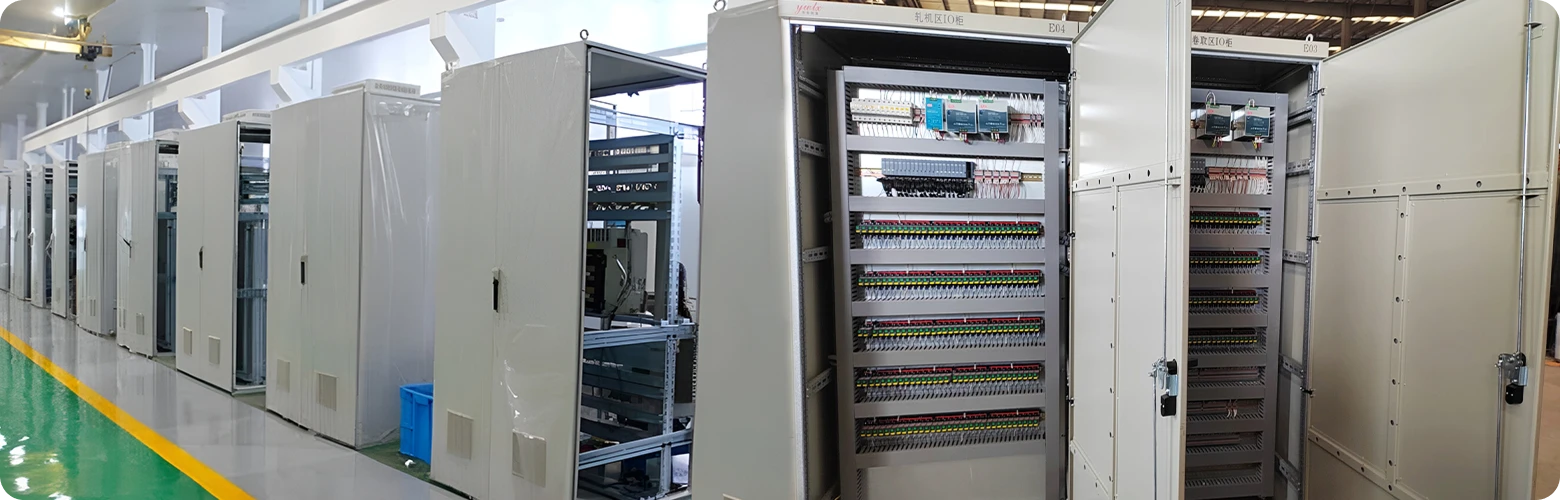
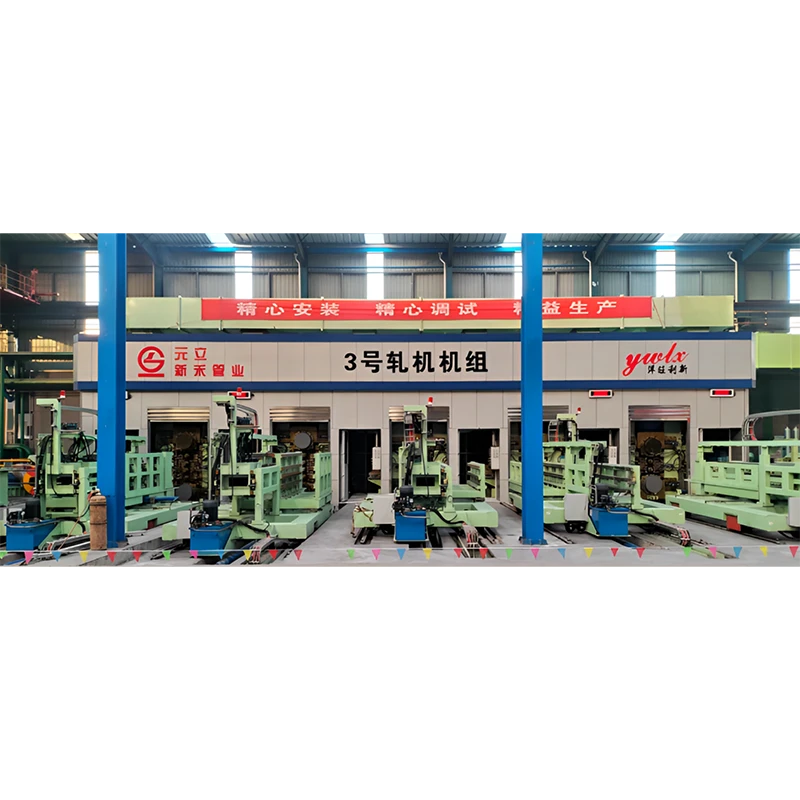

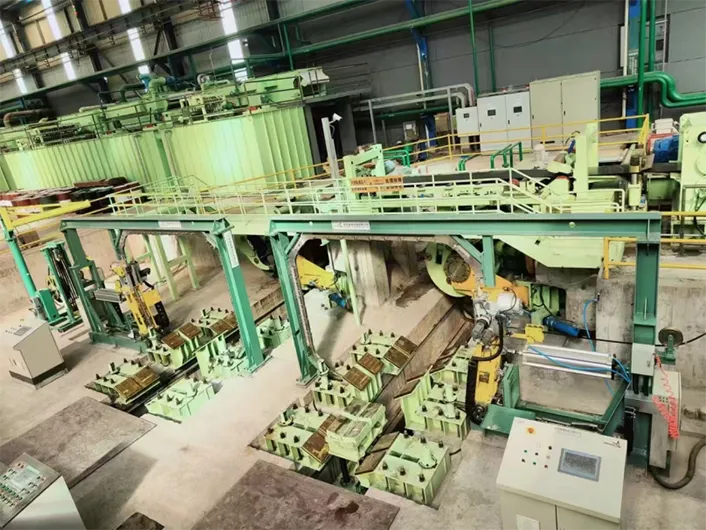
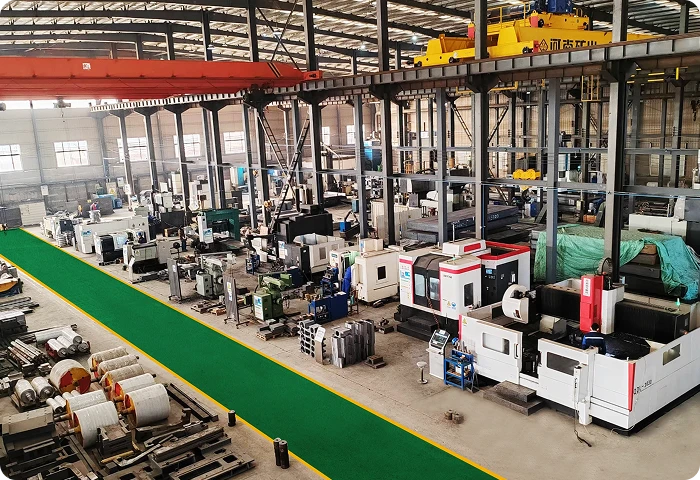
Yang Wang Li Xin operates a state-of-the-art facility over 66,000 square meters,and our manufacturing facility is fully equipped with high-tech machinery and high-capacity cranes. This enables us to handle large work pieces measuring 4.5m in width, 10m in length, and 1.5m in height, guaranteeing our capacity to produce 1800mm skin-pass mills and 1450mm rolling mills. The individual piece can weigh up to 100 tons.

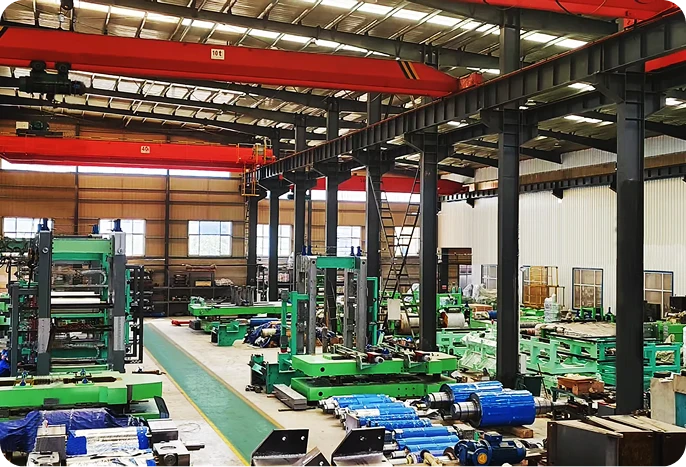

Quality is fundamental to the enterprise survival. We have established a comprehensive and meticulous quality management system and have successfully obtained ISO14000 certification. Starting from the design source, it supervises the entire production cycle, including design, procurement, processing, assembly, in-factory testing, installation, and online commissioning. The workshop is equipped with measuring tools like vernier calipers, spectrometers, hardness testers, and ultrasonic flaw detectors. They are used to check materials and control tolerances to ensure the final equipment meets or exceeds requirements. All products have a unique code, This enables the easy identification and traceability of the equipment components and ensures full control of quality.


-
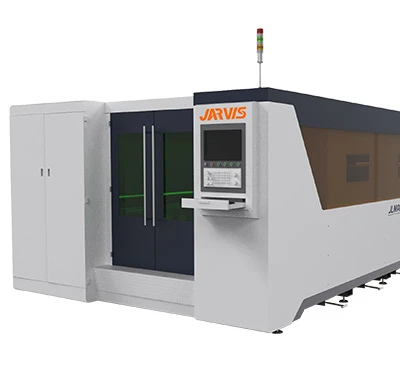 in a four high rolling millIn the realm of metal processing, the four high rolling mill emerges as an invaluable component, pushing the frontiers of precision and efficiency. This piece of machinery is crafted meticulously to cater to the demands of manufacturing sectors, enhancing the quality of metal sheets and strips. With years of personal experience and professional expertise, I delve deep into the components, utility,
 -
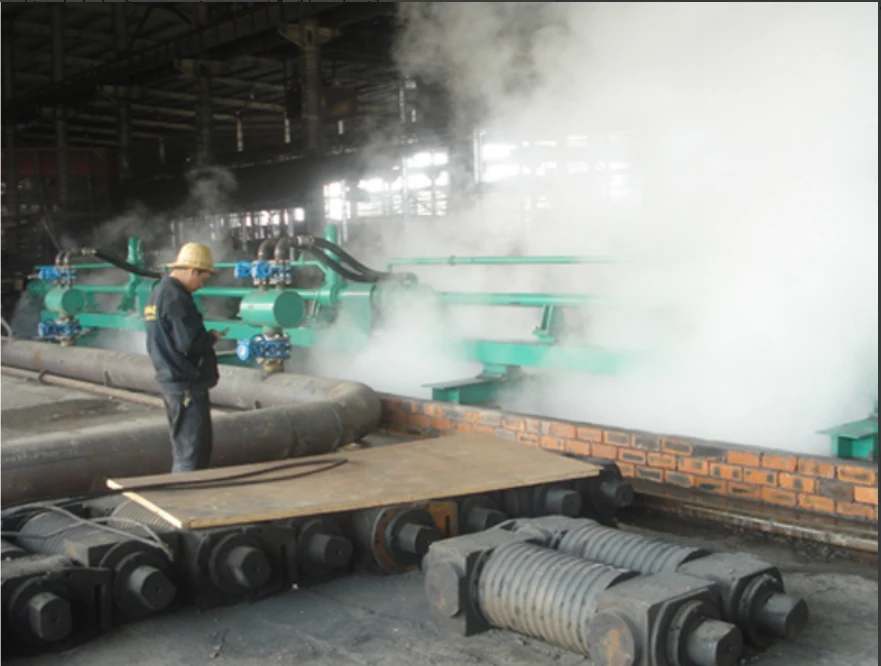 The Power of Automatic Gauge Control in Modern Rolling MillsIn the field of modern metallurgical engineering, achieving precise thickness control during the rolling process is one of the most critical challenges. As global demand grows for high-quality steel and non-ferrous metal products, the need for precision, consistency, and automation in rolling mills has never been greater. One of the most important technologies enabling this control is the AGC syst
 -
Water Cooling System for Water Tank: Efficient & Reliablewater cooling system for water tank,cooling water expansion tank,cooling water storage tank is a key solution in the Manufacturing industry, specifically within Metals & Mining and Steel Rolling Mills. This article explores how Beijing Yang Wang Li Xin Sci&Tech Co.,Ltd. supports professionals with durable, high-performance products, and explains why this product is an ideal choice for businesses i


